Before the Art, the Story
The Art of Pichwai
Origins
Born in the Temples of Nathdwara
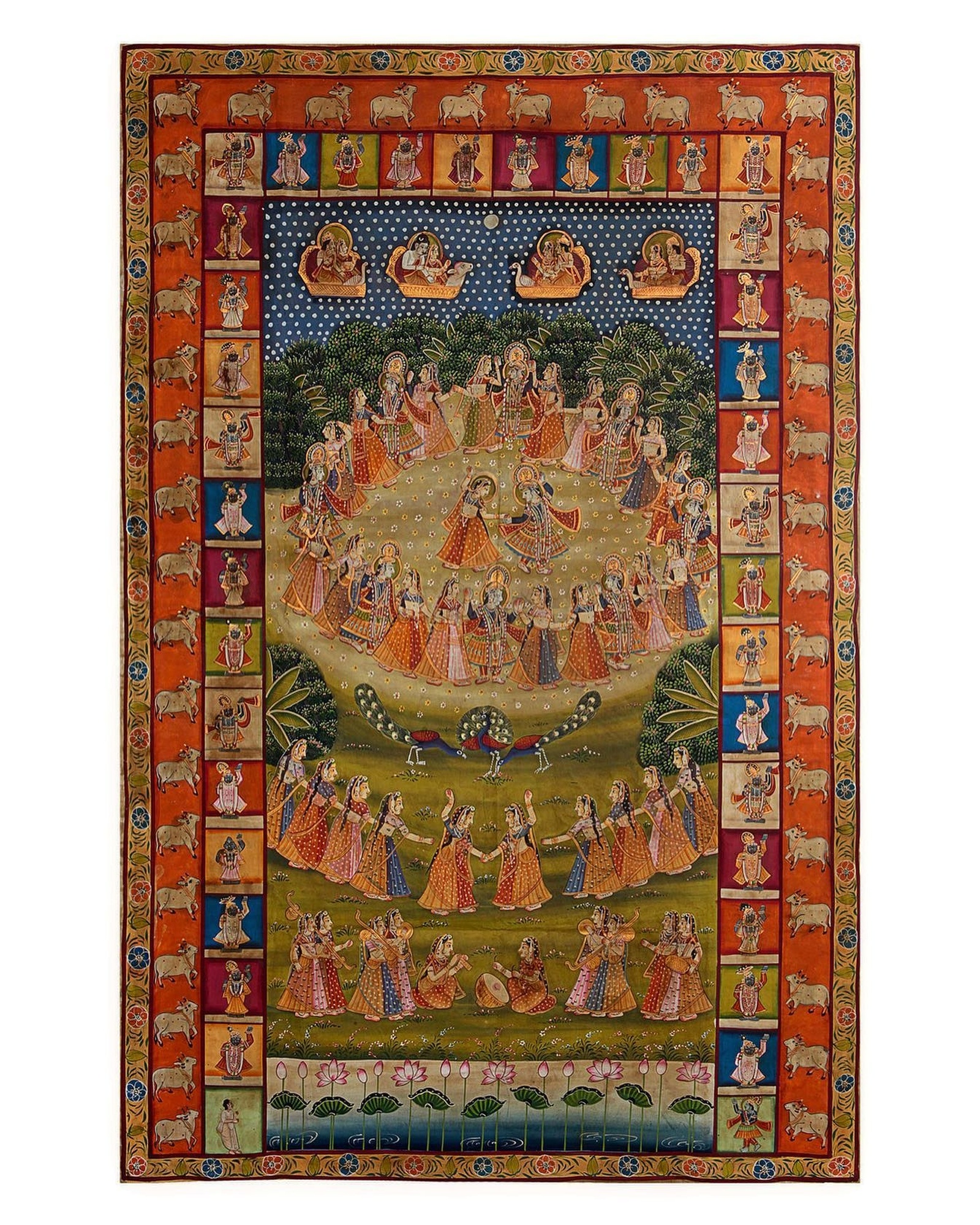
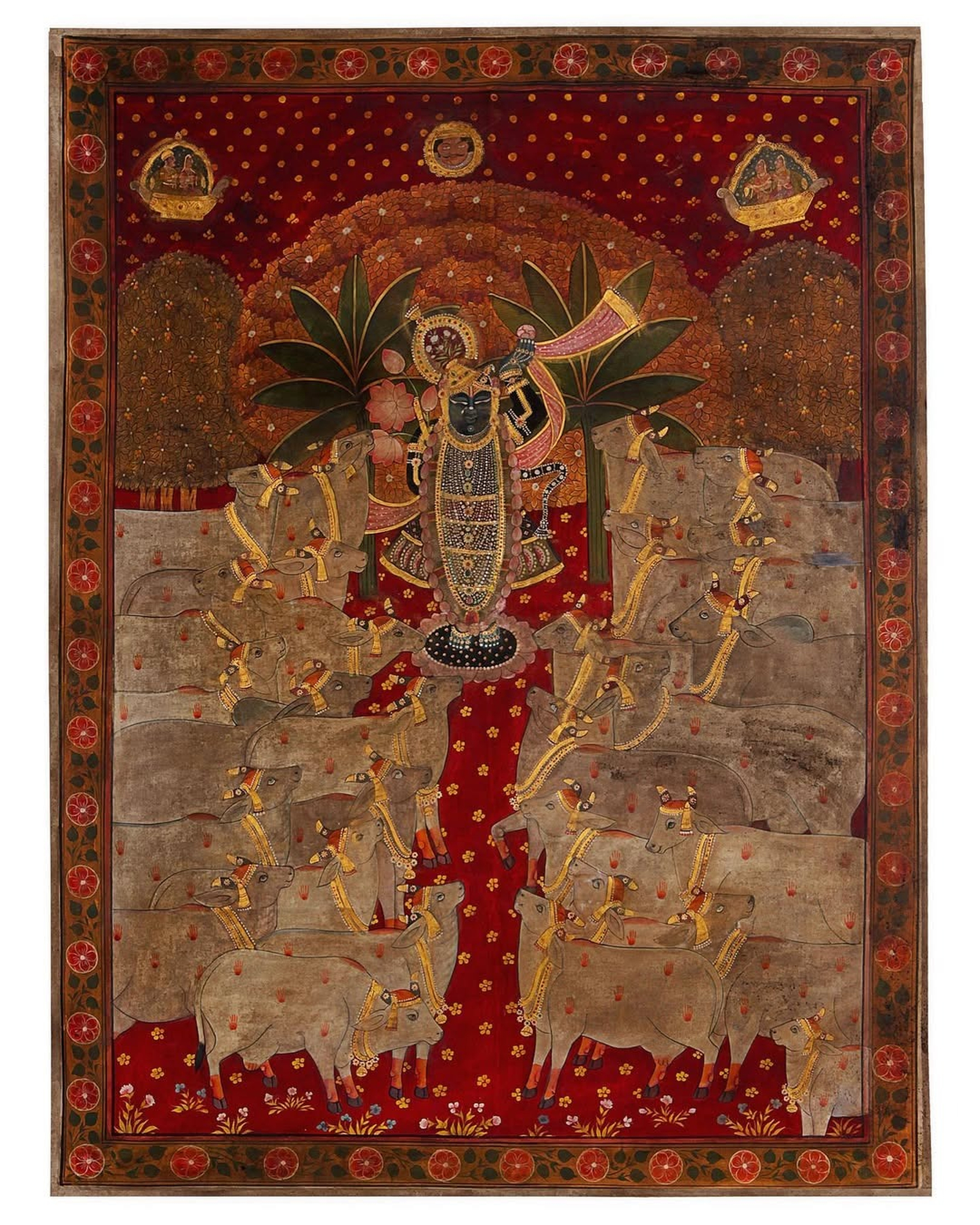
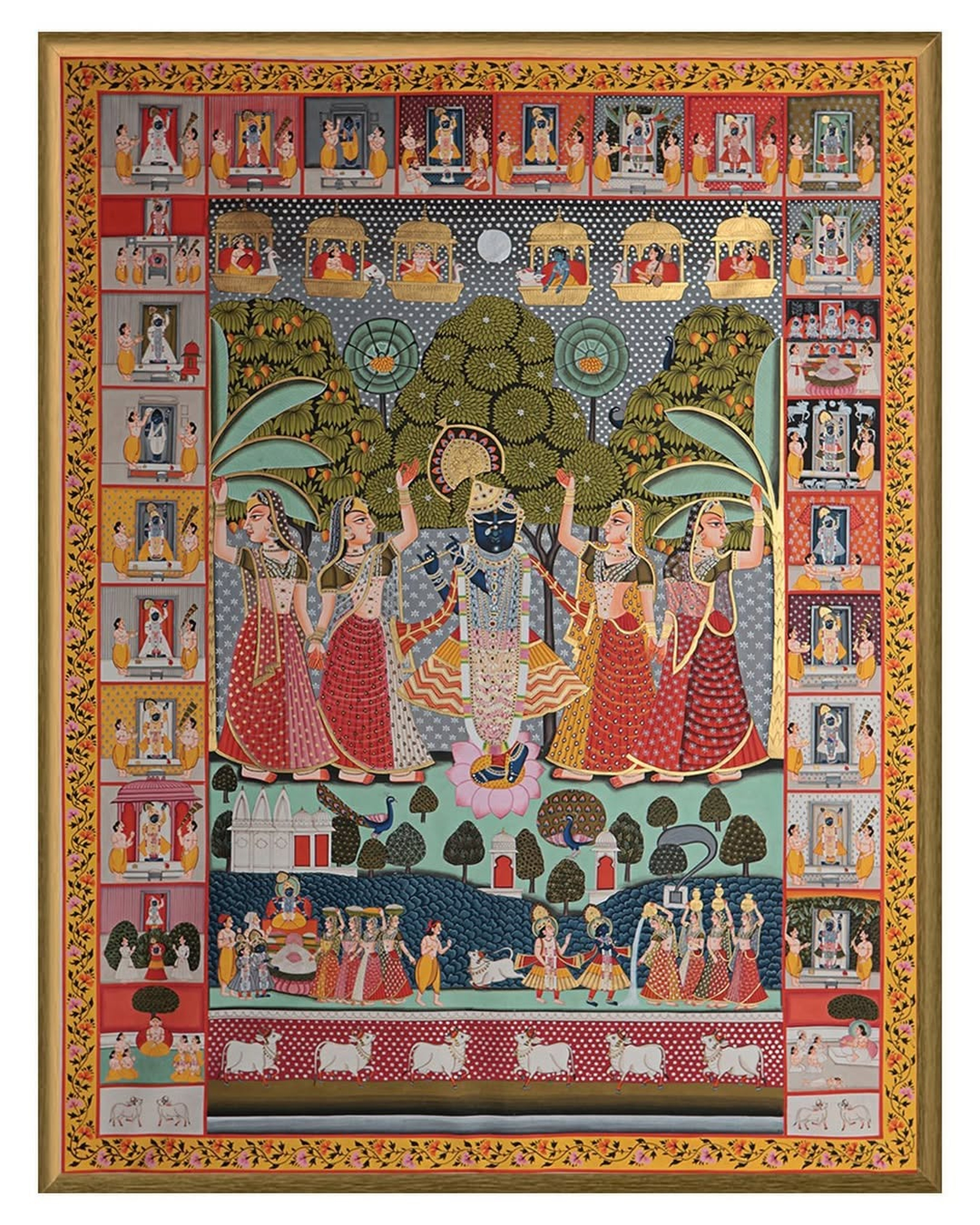
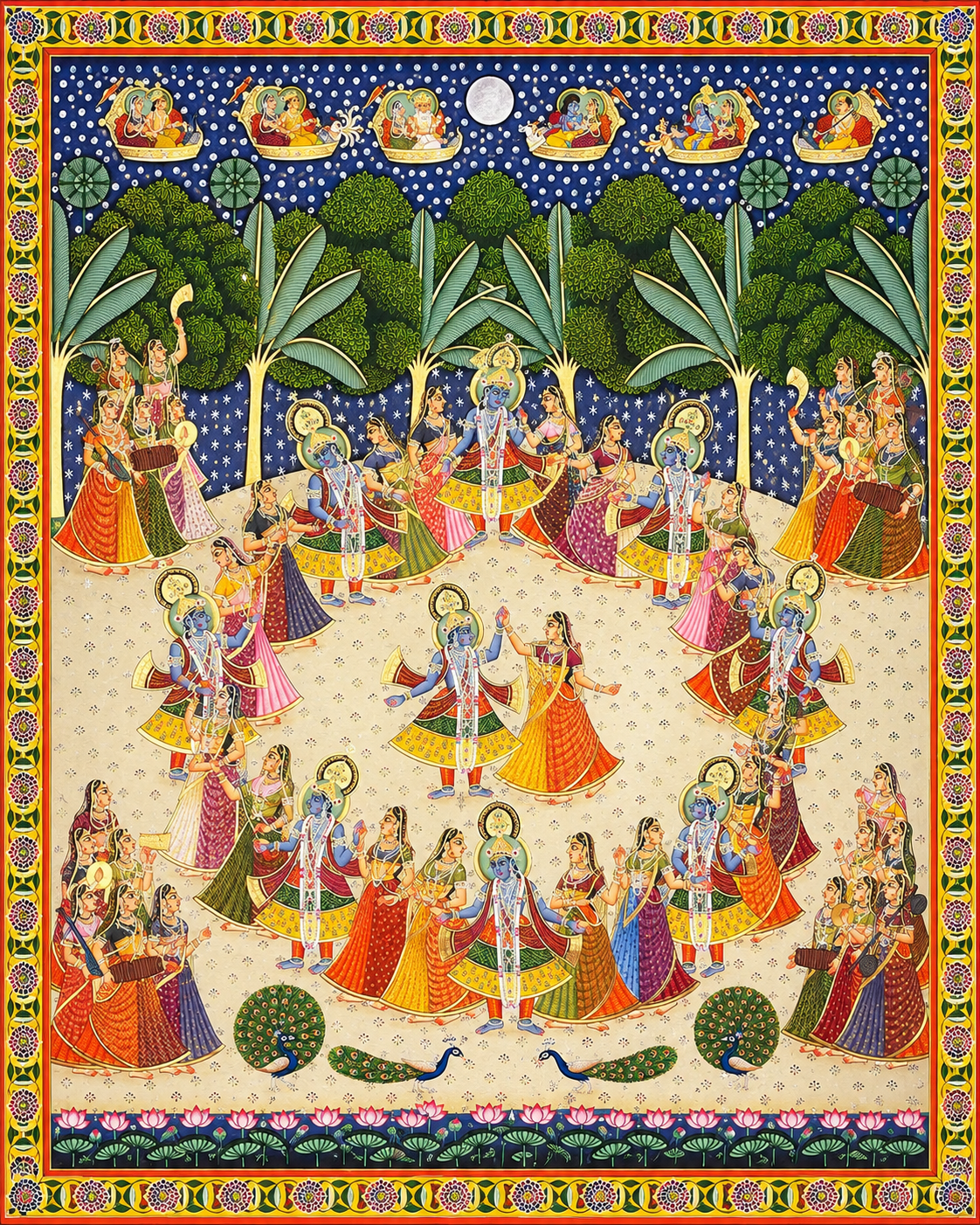
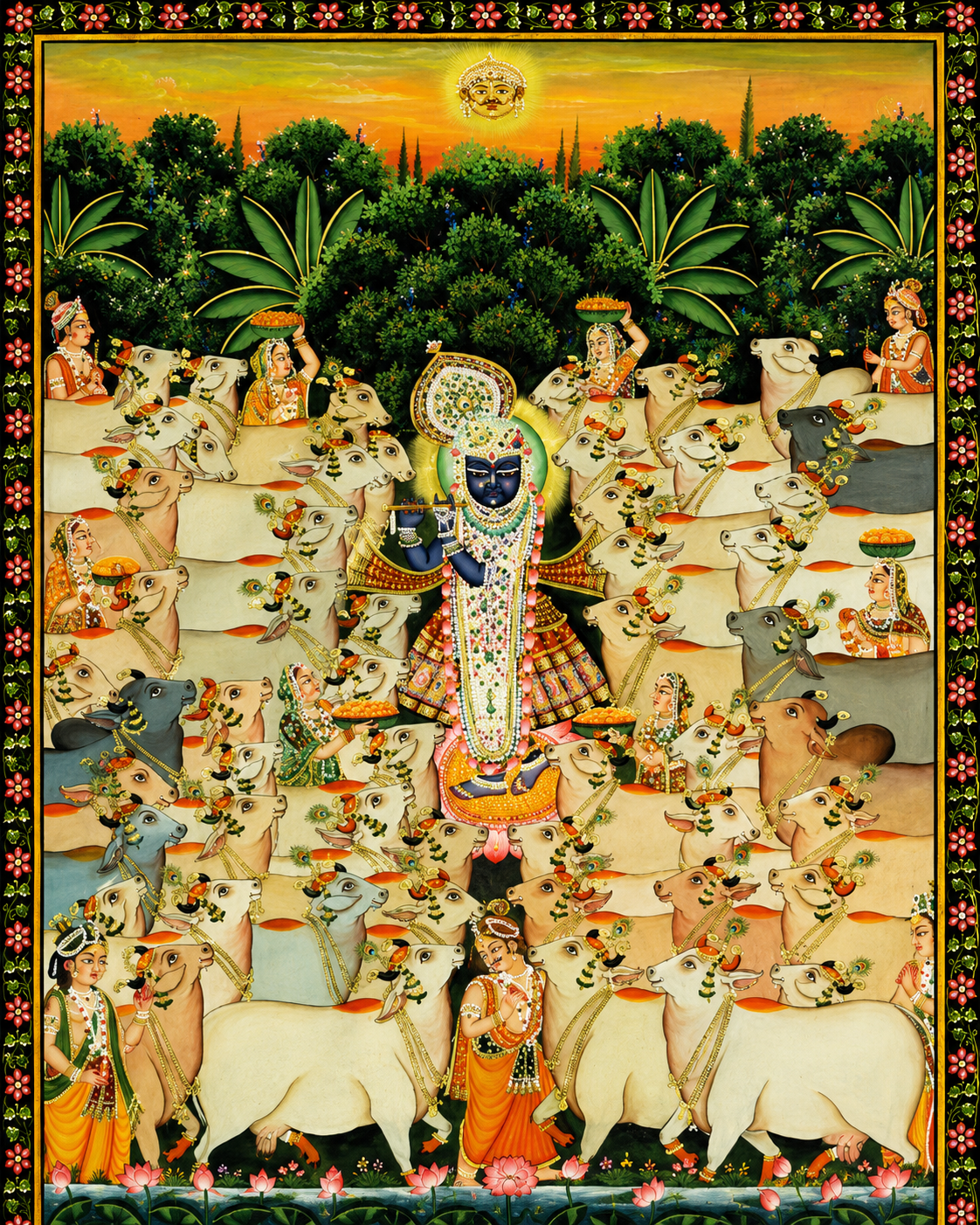
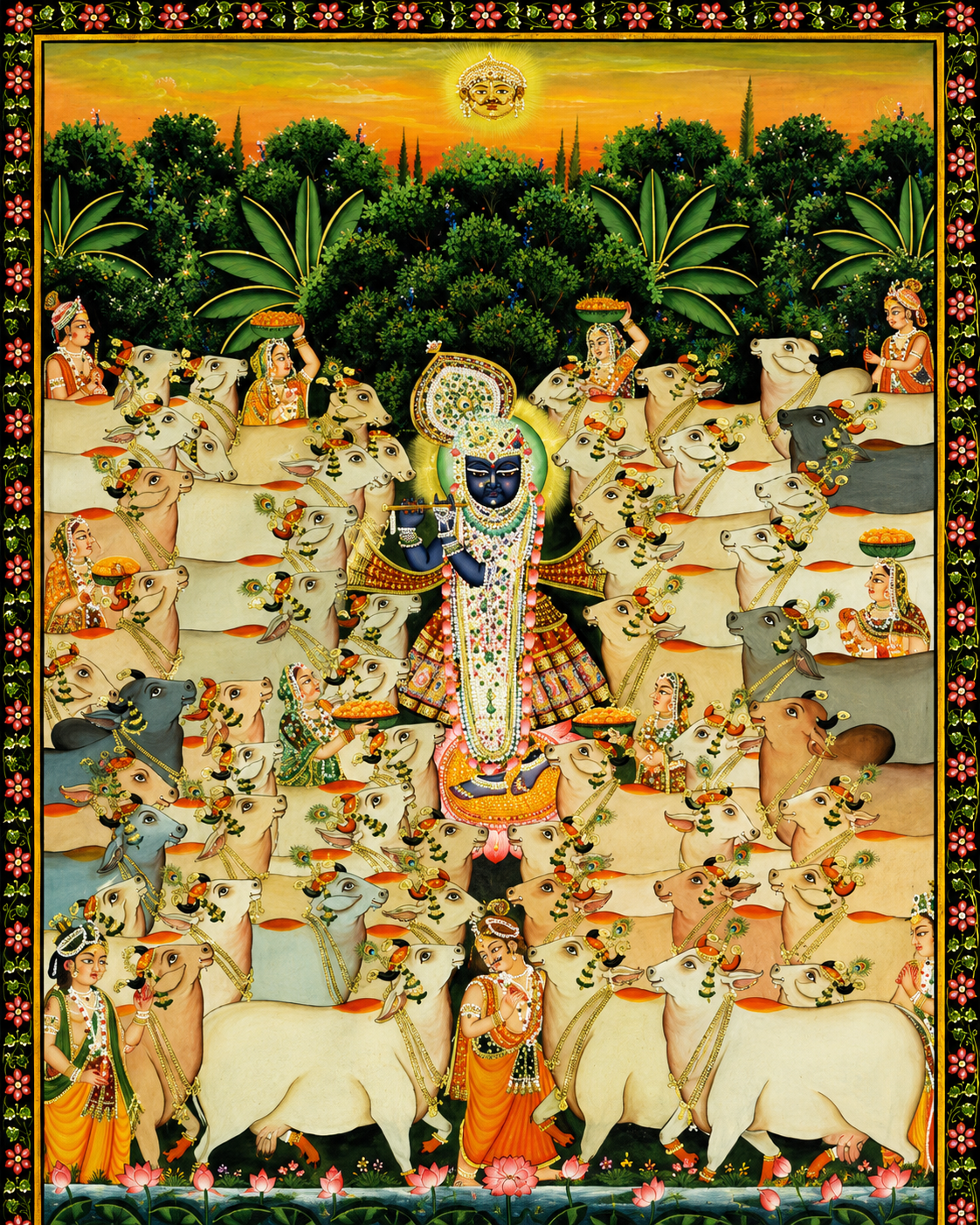
Pichwai — literally “that which hangs from the back” — traces back to 17th-century Nathdwara, Rajasthan, where large cloth hangings were painted to hang behind the idol of Shrinathji. Each depicted a scene from the life of Krishna: cows grazing beneath the kadamba tree, lotus ponds in bloom, dancing peacocks, the joyous festival of Annakut.
What began as devotional temple art became one of India’s most intricate painting traditions — passed from master to apprentice for over three centuries.
Craft
A Living Tradition
Every piece is still made entirely by hand — pigments ground from stone and vegetable dye, gold leaf applied stroke by stroke, patterns built from thousands of individual marks. A single painting can take anywhere from two to twelve weeks.
We work directly with artisan families in Nathdwara who have practised this craft for generations, translating a centuries-old temple art for the modern home.